

Developing entertainment applications is one of Kineton’s core areas of expertise. Creating software artifacts, often through “greenfield” engineering projects, has led us to consider not just the technical quality of the final product (i.e., “how it works” in strictly technical terms) but also how users interact with it. Entertainment applications are designed for direct user engagement, meaning that “how it works” now also includes the user interface and the overall user experience.
In this context, UI and UX design have evolved significantly, moving from simple static pages to highly interactive and personalized experiences. A key driver of this evolution is the use of cognitive psychology, which helps create interfaces that are both effective and intuitive. Complementing this are advanced techniques like Optimistic UI, which enhance users’ perception of the application’s responsiveness and fluidity.
Cognitive Psychology and UI/UX
Cognitive psychology studies how people perceive, remember, and interact with the world around them. Within UI design, it plays a fundamental role, helping designers create experiences that are intuitive, engaging, and natural. Understanding human behavior enables technology to feel more seamless and approachable.
Key Psychological Principles
When designing effective user interfaces, it is essential to understand how people think, process information, and make decisions. Cognitive psychology offers several principles that help designers reduce mental effort and improve perceived usability:
-
Cognitive Load: Reducing mental effort is essential to keeping users satisfied. A simple, intuitive design allows users to focus on the main task without being distracted by unnecessary details.
-
Hick’s Law: The more choices available, the longer it takes to make a decision. Limiting options helps users navigate the interface faster.
-
Fitts’ Law: The larger and closer an interactive element, the less time it takes to reach it. This principle is critical when positioning buttons and other key UI elements for easy interaction.
-
Serial Position Effect: Users remember items at the beginning (primacy effect) and end (recency effect) of a sequence better. This principle can guide designers on where to place crucial content or menu items.
Optimistic UI: The Next Step in User Experience
Optimistic UI is a design strategy that makes interfaces feel faster and more responsive by providing immediate visual feedback after a user action, assuming success before server confirmation.
Apps like Netflix already use this approach: when a user adds a movie to “My List,” the icon updates instantly, without waiting for server confirmation. If an error occurs, the interface can correct itself and notify the user.
E-commerce platforms like Amazon also use this technique: when a purchase is made, the product appears as purchased immediately, reducing perceived wait time and improving the overall experience.
Benefits include:
-
Reduced perceived waiting time: the app feels faster and more responsive, alleviating user anxiety
-
Increased satisfaction: smooth, predictable interfaces provide a relaxing experience
-
Error management: failed actions can revert seamlessly, with clear notifications to the user
Modern UI/UX design relies on a deep understanding of human behavior. Using strategies like Optimistic UI, supported by cognitive psychology principles, significantly enhances the user experience. This approach reduces the number of steps and perceived time needed to complete an action, lowering cognitive load and allowing users to interact confidently, knowing the interface provides immediate feedback. Positive visual feedback increases engagement and trust, helping users stay focused on their goals while reducing stress and mental fatigue.
Fitts’ Law in Practice
Fitts’ Law states that the larger and closer a target, the faster it can be reached. Strategically placing interactive elements, like buttons and icons, in easily accessible areas, such as along screen edges, improves usability. Ensuring buttons are large enough for easy mobile interaction reduces errors and simplifies engagement. A prominent, centrally placed “Buy Now” button is a practical example.
Serial Position Effect in Practice
Users remember the first and last items in a list more effectively. This principle can guide designers when arranging menus, lists, tutorials, or guided procedures, ensuring key items are placed at the beginning and end for maximum recall. Highlighting special offers or featured products at these positions increases visibility and engagement.
Integrating these principles not only improves usability but also enhances user engagement and trust. A combination of Optimistic UI, immediate feedback, Fitts’ Law, and Serial Position Effect creates a seamless, enjoyable user experience.
React.js and Optimistic UI
React.js, one of the most popular JavaScript libraries for building user interfaces, is valued for creating reusable, interactive components. With the arrival of React 19 (currently a Release Candidate), significant improvements have been introduced, including:
-
Performance optimization
-
More efficient state management
-
Easier integration of advanced techniques like Optimistic UI
React 19 also introduces Concurrent Rendering, making user interactions smoother and more dynamic.
Implementing Optimistic UI in React 19 is possible through useTransition and state management hooks like useState. For example, the interface can update immediately after a user action, before server confirmation. Using useState to handle asynchronous calls and useTransition for smooth transitions ensures a responsive and intuitive UI.
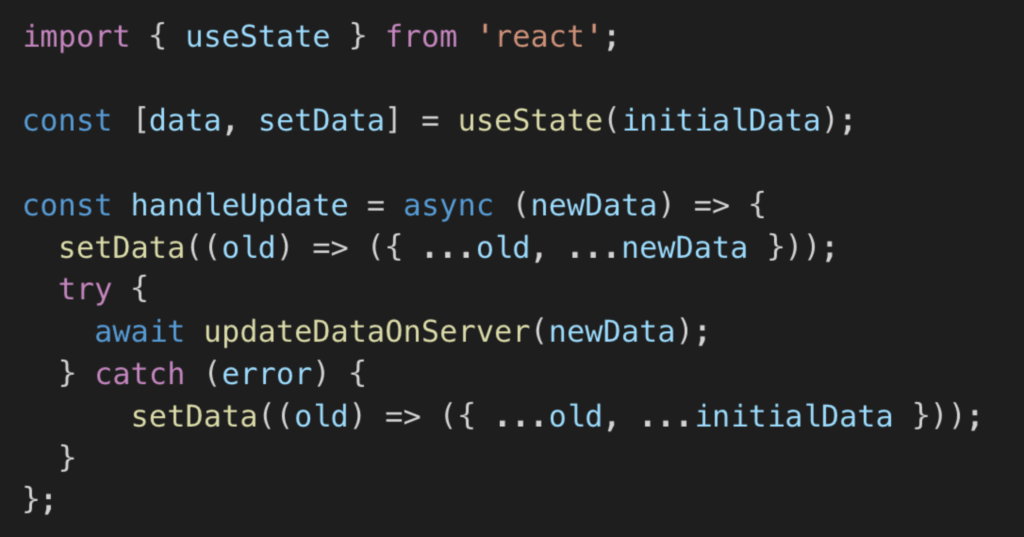
React 19 introduces the concept of “transition” via useTransition, which can be used to make interface changes smoother in the case of optimistic updates.
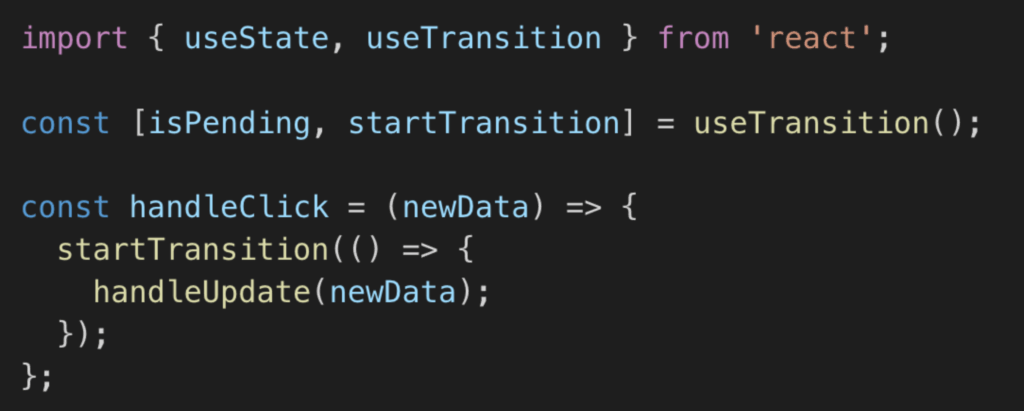
These tools allow you to provide immediate feedback to the user, reducing the perception of waiting and significantly improving the overall experience. Using useState to update data immediately and useTransition to manage smooth transitions ensures a responsive and intuitive interface.
Conclusion
The evolution of UI/UX in web development has led to increasingly personalized and engaging experiences. Integrating cognitive psychology and techniques like Optimistic UI is essential for creating interfaces that are not only functional but also intuitive and enjoyable to use.
Looking ahead, artificial intelligence and machine learning will further transform UX, enabling adaptive, predictive experiences that anticipate user needs proactively.
Written by Nello Saulino


