

Smart cities, with their advanced technological infrastructure, represent the ideal environment to fully leverage the potential of vehicular communications (V2X). This integration promises to revolutionize urban mobility, making it safer, more efficient, and sustainable.
Optimized Traffic Management
- Adaptive Traffic Control Systems: Artificial intelligence analyzes data from connected vehicles to predict traffic flows and dynamically adjust traffic lights, speed limits, and recommended routes, reducing congestion and optimizing travel times.
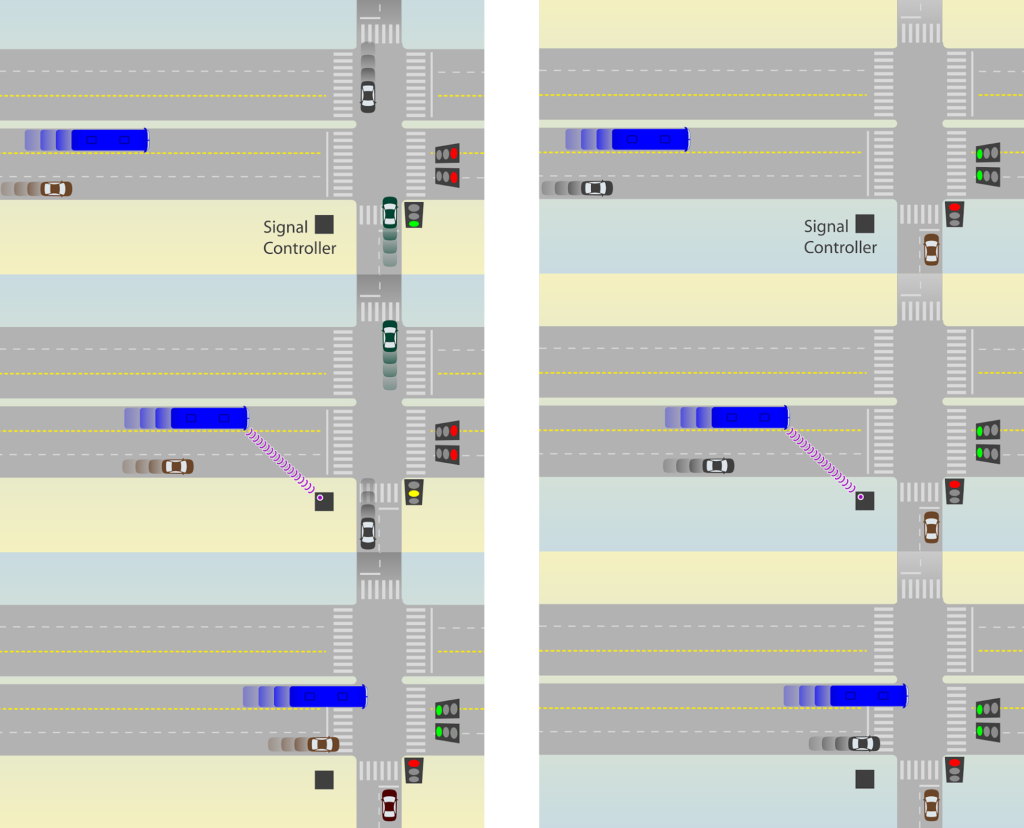
- Priority Traffic Corridors: Emergency vehicles and public transportation can receive priority passage at traffic lights, ensuring timely interventions and an efficient public transport service.
- Simulations and Analysis: Collected data allows for the creation of complex traffic simulations, assessing the impact of new infrastructure or transport policies before their implementation
Proactive Road Safety
- Real-time Hazard Alerts: Vehicles exchange information about imminent dangers, such as accidents, adverse weather conditions, or obstacles on the road, enabling drivers to react promptly.
- Collision Prevention Systems: On-board systems, thanks to V2X communication, can detect potential collisions and warn the driver or intervene autonomously to avoid them.
- Road Condition Monitoring: Sensors integrated into the infrastructure monitor road surface conditions, providing crucial information to drivers and relevant authorities.
Sustainable Mobility
- Support for Electric Vehicles: Smart cities provide real-time information on the availability of charging stations, charging times, and optimized routes for electric vehicles, encouraging their adoption.
- Shared Mobility: Integration with car-sharing, ride-sharing, and bike-sharing platforms allows for efficient fleet management and promotes the use of sustainable transportation modes.
- Environmental Monitoring: Sensors distributed throughout the city monitor air quality, allowing drivers to choose routes that minimize exposure to pollution.
Connected Driving Experience
- Personalized Infotainment: Vehicles offer a tailored entertainment experience, with access to music, videos, news, and real-time traffic information, customizable based on user preferences.
- Automatic Payments: Communication systems enable automatic payments for tolls, parking, and other services, simplifying drivers’ lives.
- Over-the-Air (OTA) Updates: Vehicles receive software updates wirelessly, ensuring optimal performance and the addition of new features over time.

Challenges and Opportunities
The integration of vehicular communications into smart cities presents significant challenges, such as protocol standardization, cybersecurity, and data privacy. However, the opportunities are immense:
- Improved road safety: reduction of accidents and increased protection for drivers, passengers, and pedestrians.
- Traffic optimization: reduction of congestion, improvement of travel times, and decrease in pollutant emissions.
- Development of innovative services: creation of a more efficient, connected, and personalized mobility ecosystem.
Conclusions
The synergy between smart cities and vehicular communications represents a fundamental step towards a future of intelligent and sustainable mobility. Collaboration between all stakeholders—automotive manufacturers, technology providers, authorities, and citizens—is essential to address the challenges and seize the opportunities of this technological revolution, creating more livable cities and a more efficient and safe transport system for everyone.
Written by Luigi Zampogna


